
Last time we discussed how important it is to place the roofline correctly when adding on to an old house. If the roofline is too high or set at the wrong pitch, the addition could look awkward or even overwhelm the original part of the house.
Now let's talk about exterior details. Too many additions on historic houses suffer because contractors use stock materials instead of trying a little harder to make their work blend with the original house. Most of our clients want their additions to blend in with the original house. They want the same level of detail: period appropriate windows, moldings, etc.
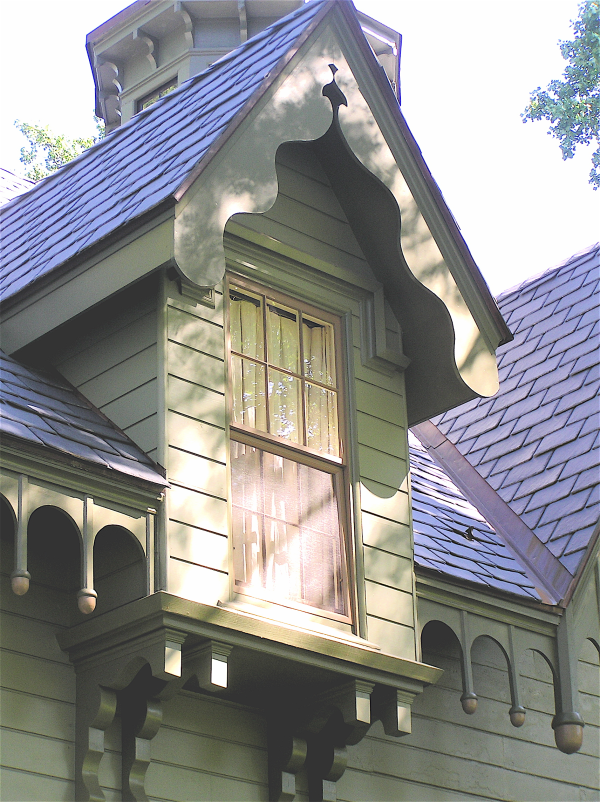
We start by looking at the trim of the original house: the roof trim (rakes, fascias and soffits), cornerboards, window and door trim, and so on. Does the old house have large overhangs as seen below? Or was the trim shallower? How does the rake trim meet the fascias and soffits? Are there decorative brackets on the house? What's the profile of the moldings? Molding profiles change with the architectural style. Do the moldings on the house seem original or were they changed at some point? How thick are the windowsills? What materials sis they use?
Once we've assessed the existing trim we face a choice: do we exactly duplicate the trim on the addition to match the original house? Historically, it was not uncommon for a historic house to have a slightly lower level of detail on rear or side ells than the main house had- even if they were built at the same time. This was particularly true in the second half of the 19th century on houses that boasted elaborate trim. If that's the case, we'll often scale down the trim on the addition. Often, however, it is more appropriate to use the same trim details on the addition as on the main house.
If the budget allows, we'll replicate the profile of the old moldings exactly, either in our shop or from a molding supplier. If there are brackets, we'll duplicate those, too. When matching original trim it is important to look at the thickness of the original trim, as well as the profile. Historic houses often used thicker trim than typically used these days, which results in a more substantial look and deeper shadow lines. It's surprising, for example, how much different standard 3/4" cornerboards can look on a house than ones that are 1" thick. The former often look like cheap substitutes - which they often are.
To replicate moldings in our shop we use a molding machine and use heavy steel knives ground down to the intended profile. Sometimes, however, we find stock moldings that- with a little work- will do the job. We'll take a stock molding that's close to the original and maybe rip a little off one side, or add a bead detail with a router. Whenever possible we try to stay away from installing moldings right off the lumber yard shelf.
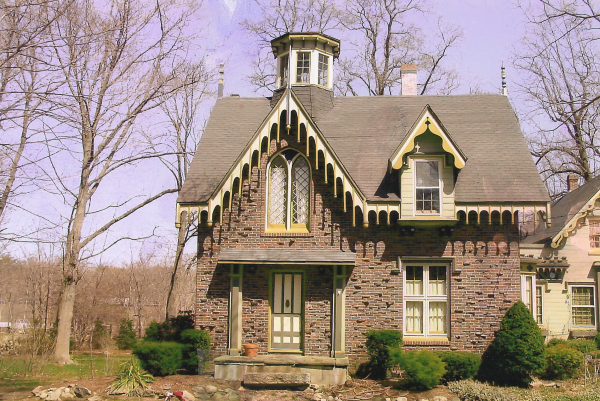
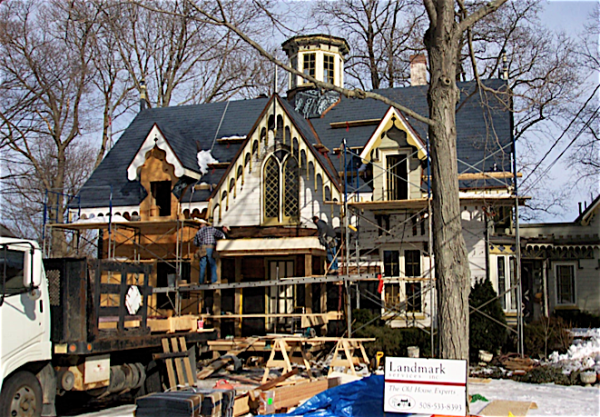
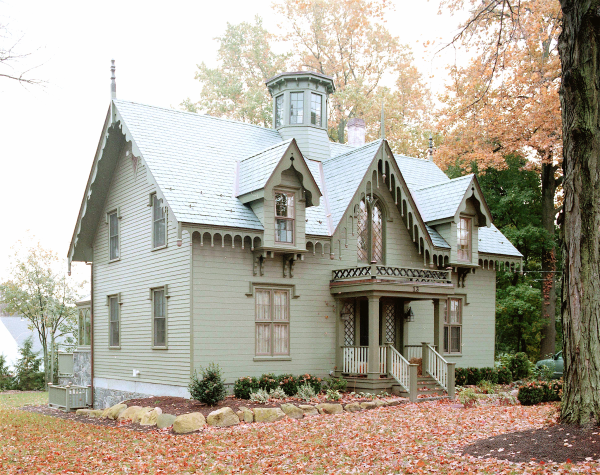
The project shown below is an extreme example of matching original trim on an addition. The original (ca. 1860) house features some pretty spectacular carpentry. Since the goal of the project was to make the addition look like part of the original house, we took pains to make our work match down to the smallest detail.
Here's the house before we started work. The brick was added in the 1950's.
Here we are part way through. We have the addition framed,roofed, and partly trimmed. You'll also notice that we have taken the brick off and discovered the original tongue and groove siding. We had some more reproduced for the addition.
The completed project! By faithfully reproducing the original trim, milling reproduction siding, and even installing granite veneer stones on the foundation, it is nearly impossible to tell that this is an addition.
Landmark Services has been building additions to historic Massachusetts houses for almost 20 years. Have a look at our project portfolio to see more of these additions.
We'd love to help you plan and build your addition! Give is a call. We're Landmark Services, The Old House Experts.